- Jan 27, 2026
When You Can't Sleep Because You're Anxious About Not Sleeping: Breaking the Sleep Anxiety Loop
- Dr. Mel
- 0 comments
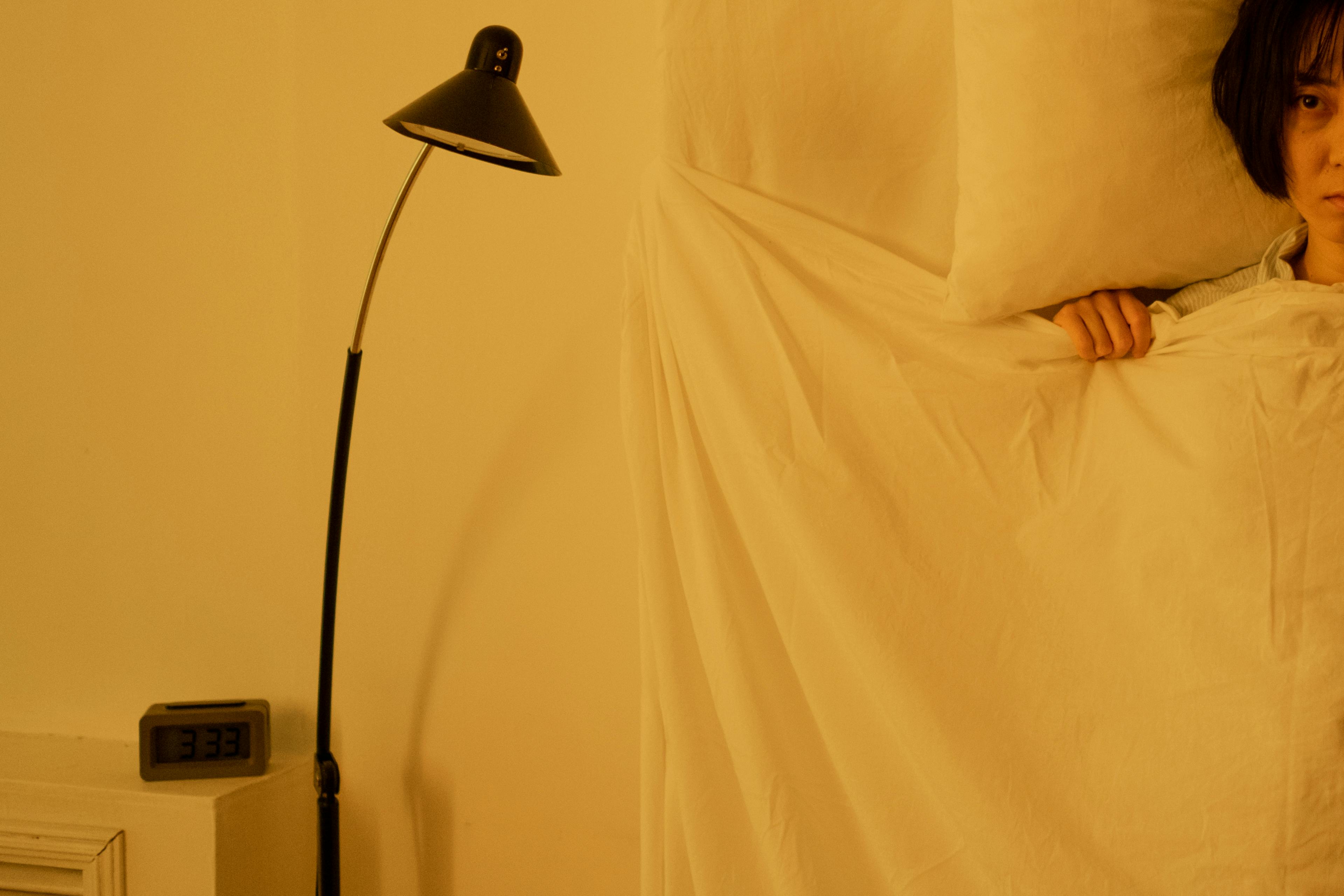
Photo by cottonbro studio: https://www.pexels.com/photo/a-woman-suffering-from-insomnia-6753361/
It's 2 AM. You've been lying here for three hours. Eyes closed, trying everything you know—controlled breathing, progressive relaxation, counting backwards from 100.
Nothing.
Your mind won't turn off. Your body won't settle. And now you're doing the math: "If I fall asleep right now, I'll get four hours. Three and a half. Three."
The anxiety about not sleeping is now keeping you awake more than whatever woke you up in the first place.
Welcome to sleep anxiety—the cruel loop where worrying about sleep prevents the exact thing you desperately need.
And here's what most sleep advice misses: This isn't a sleep hygiene problem. It's a nervous system problem.
Sleep Anxiety vs. Insomnia vs. Poor Sleep
People use these terms interchangeably. They're different.
Poor Sleep: Occasional difficulty sleeping due to stress, noise, discomfort, schedule changes. Resolves when the trigger resolves. No anxiety about sleep itself.
Insomnia: Persistent difficulty falling asleep or staying asleep (3+ nights per week for 3+ months). May or may not involve anxiety about sleep. Often has physical causes (pain, sleep apnea, medication effects).
Sleep Anxiety: Anxiety about sleep becomes the primary problem. Fear of not sleeping, obsessive clock-watching, catastrophizing about tomorrow if you don't sleep now. The anxiety itself prevents sleep. Your nervous system is activated by the idea of not sleeping.
The key difference: With sleep anxiety, your threat detection system has learned that bedtime = danger. Not because the bed is unsafe, but because "not sleeping" feels like a survival threat.
From a trauma perspective, sleep anxiety often develops after a period of genuinely disrupted sleep (new baby, illness, stressful event, insomnia). Your nervous system learned: "Nighttime is when bad things happen. Sleep is unpredictable and threatening."
Now, even when the original trigger is gone, your body still responds to bedtime with activation instead of rest.
South African context: When you've spent months or years with sleep disrupted by load shedding (power cuts at 3 AM, generator noise, unsafe feeling when electricity goes out), infrastructure failures (no water means can't shower before bed, broken roads mean earlier wake time for commute), or economic stress (lying awake worrying about daily cost increases), your nervous system learns that nighttime = threat time.
Even when the power stays on, your body remembers. Sleep anxiety persists after the external trigger resolves because the pattern is now internal.
What Sleep Anxiety Actually Feels Like
"I'm exhausted but the moment I lie down, I'm wide awake."
"I fall asleep fine, but I wake at 2 or 3 AM and can't get back to sleep. Then I just lie there panicking about tomorrow."
"I spend the whole evening dreading bedtime because I know I won't sleep."
"I can't stop checking the clock. Every time I look, I recalculate how much sleep I'll get. Which makes me more anxious."
"My body is tired but my mind won't turn off. It's like my brain waits until I'm lying down to bring up every problem I have."
"I fall asleep eventually, but only from pure exhaustion at 4 or 5 AM. Then I have to wake up at 6."
Physical symptoms:
Racing heart when you lie down (activation when you should be calming)
Muscle tension (body can't relax)
Mind feeling wired despite physical exhaustion
Restless legs or need to move
Feeling hot or uncomfortable no matter the temperature
Shallow breathing or feeling like you can't get enough air
Jaw clenching or teeth grinding
Cognitive symptoms:
Obsessive clock-watching
Catastrophizing ("I won't function tomorrow," "I'll get sick if I don't sleep")
Calculating hours of sleep left
Hyperawareness of every sound, sensation, thought
Ruminating on problems that feel manageable during the day
Monitoring whether you're falling asleep (which prevents falling asleep)
Frustration and anger at your body for not sleeping
Behavioral symptoms:
Avoiding bed even when tired (scrolling on phone, watching TV)
Getting up repeatedly to "try again later"
Trying increasingly desperate strategies (supplements, apps, techniques)
Sleeping better away from home (hotel, friend's house) than in your own bed
Anxiety starting in the evening, building toward bedtime
Using alcohol or substances to force sleep
The cruelty of sleep anxiety: The harder you try to sleep, the more alert you become. Sleep requires letting go of control—but anxiety demands you stay vigilant and in control.
The Sleep Anxiety Loop (Why It Gets Worse)
Here's the pattern that traps people:
Step 1: Something disrupts your sleep (stress, event, illness, life change)
Step 2: You have a few bad nights. Normal response.
Step 3: You start worrying about sleep during the day. Anxiety builds as bedtime approaches.
Step 4: You go to bed already anxious. Your nervous system is activated instead of calm.
Step 5: You can't sleep (because your nervous system is in threat mode, not rest mode).
Step 6: You lie there getting more anxious about not sleeping.
Step 7: This confirms your fear: "See? I can't sleep."
Step 8: Next night, you approach bed with even more anxiety because last night "proved" you can't sleep.
Repeat. The loop strengthens.
From a BWRT (BrainWorking Recursive Therapy) perspective, this is a recursive loop—your brain has created an automatic pattern:
Bedtime → Threat detected → Anxiety activated → Can't sleep → "I was right to be anxious" → Pattern reinforced
This happens pre-cognitively. Before you consciously think "I won't sleep," your amygdala has already activated your stress response.
Which is why positive thinking ("I'll sleep fine tonight!") doesn't work. The pattern runs before conscious thought.
Why Standard Sleep Advice Doesn't Work for Sleep Anxiety
Well-meaning people (and most sleep articles) will tell you:
"Keep a regular sleep schedule!" "No screens before bed!" "Make your bedroom cool and dark!" "Don't lie in bed awake—get up after 20 minutes!" "Try melatonin/magnesium/chamomile tea!"
This is sleep hygiene advice. It works for poor sleep. It doesn't work for sleep anxiety.
Here's why:
1. Sleep hygiene assumes your nervous system is calm
All the sleep hygiene in the world won't help if your threat detection system is activated. Your body is flooded with cortisol and adrenaline—the exact opposite of what you need for sleep.
Cool room, dark bedroom, no screens—none of that overrides "your nervous system believes you're in danger."
2. "Get up if you can't sleep" can reinforce the anxiety
This advice (called stimulus control) works for some insomnia. But for sleep anxiety, getting up at 2 AM and doing something else can reinforce: "See? I can't sleep in my bed. My bed is the problem."
Your bed becomes associated with failure and frustration, which increases anxiety the next night.
3. Trying harder makes it worse
Sleep is a paradox: You can't force it. The more you try to make yourself sleep, the more alert you become.
Every sleep technique you try with desperation ("This HAS to work or I won't sleep") activates your nervous system more.
4. Supplements don't address the nervous system activation
Melatonin, magnesium, CBD, chamomile—these might help slightly with sleep quality. But they don't address: "My amygdala has learned that bedtime is threatening."
You're trying to chemically override a learned threat response. That's not how nervous systems work.
What Sleep Anxiety Actually Needs
Not better sleep hygiene. Not more supplements. Not trying harder.
Your sleep anxiety needs:
1. Nervous system regulation (before bed and during wakeful periods)
Your body needs to learn: "Bedtime is safe. Being awake at night is uncomfortable but not dangerous."
2. Acceptance of wakefulness (ACT approach)
The fight against being awake keeps you awake. Willingness to be awake paradoxically allows sleep.
3. Distress tolerance skills (DBT)
For when you're lying there at 3 AM and anxiety is high—you need tools that work in that moment, not "prevention" tips.
4. Breaking the learned pattern (BWRT)
The automatic loop (bed → threat → anxiety) needs interrupting at the pre-cognitive level.
Let me explain each.
Nervous System Regulation for Sleep
Your nervous system has two modes: sympathetic (activation, stress, fight-flight) and parasympathetic (rest, digest, calm).
Sleep requires parasympathetic dominance. But sleep anxiety keeps you in sympathetic activation.
Before bed (1-2 hours):
You need to actively shift your nervous system toward parasympathetic.
What actually helps:
Temperature regulation:
Warm bath or shower 1-2 hours before bed (body temperature drop after signals sleep)
Cold isn't helpful before sleep (activating)
Warm feet specifically (signals safety to nervous system)
Movement that discharges activation:
Gentle stretching or yoga (not intense exercise)
Walking (slow, not fast)
Progressive muscle relaxation (tense, then release each muscle group)
Vagus nerve activation:
Humming or singing (vibration stimulates vagus nerve)
Gargling water
Deep belly breathing (hand on stomach, feel it rise and fall)
Bilateral stimulation (calming for trauma-activated nervous systems):
Butterfly hug (cross arms, tap alternate shoulders gently)
Slow walking while swinging arms
Alternating knee taps while sitting
What doesn't help (activates rather than calms):
Intense exercise close to bedtime
Stressful conversations
Work emails or financial tasks
Doom-scrolling news or social media
Anything that creates urgency or threat
During wakeful periods (2 AM, can't sleep):
DBT's TIPP skills—modified for nighttime:
T - Temperature: Cold water on face or wrists (resets nervous system) NOT ice or cold shower at night (too activating)—just cool water
I - Intense exercise: SKIP at night (too activating) Instead: Gentle movement (stretching in bed, slow walking)
P - Paced breathing: Box breathing:
In for 4
Hold for 4
Out for 4
Hold for 4
Repeat 4-6 times
Or 4-7-8 breathing (more calming):
In for 4
Hold for 7
Out for 8
Repeat 4 times
P - Paired muscle relaxation: In bed: Tense feet hard for 5 seconds, release Move up body (calves, thighs, stomach, etc.) Notice difference between tension and release
Important: You're not doing this "so you'll fall asleep." You're doing it to regulate your nervous system whether you sleep or not.
The ACT Approach: Willingness to Be Awake
This is counterintuitive, but crucial:
The battle against wakefulness keeps you awake.
From an ACT (Acceptance and Commitment Therapy) perspective, sleep anxiety is experiential avoidance—you're fighting against the experience of being awake, which creates struggle, which activates your nervous system, which prevents sleep.
The ACT principle:
Stop trying to force sleep. Be willing to be awake.
Not: "I give up, I'll never sleep" (despair) Instead: "I'm awake right now. That's uncomfortable. AND I don't have to fight it."
Willingness practice:
When you're lying there awake at 2 AM:
Notice: "I'm awake. My mind is active. My body feels restless."
Accept: "This is what's happening right now. I don't have to like it."
Let go of fighting: "I'm willing to be awake for as long as I'm awake."
Paradoxically, when you stop fighting being awake, your nervous system calms. And when your nervous system calms, sleep becomes possible.
The sleep effort paradox:
Trying to sleep = Effort = Activation = Can't sleep
Willing to be awake = Letting go = Calm = Sleep becomes possible
ACT nighttime practice:
Instead of: "I HAVE to fall asleep" Try: "Sleep will come when it comes. Right now I'm just lying here resting."
Instead of: "I can't function tomorrow if I don't sleep" Try: "I've functioned on little sleep before. It's uncomfortable, not catastrophic."
Instead of: "This is unbearable" Try: "This is uncomfortable AND I'm handling it right now."
Important distinction:
This isn't "giving up on sleep." It's giving up the struggle against wakefulness.
One keeps you awake. The other allows sleep.
DBT Distress Tolerance: What to Do at 3 AM
You're lying there. You've been awake for an hour. Anxiety is building. Mind racing. Clock-watching.
You need distress tolerance skills—tools that work in the moment when anxiety is high.
Radical Acceptance (DBT):
"I can't control whether I fall asleep right now. I CAN control how I respond to being awake."
This moment, right now, I am awake. Fighting that fact creates suffering.
Radical acceptance isn't approval. It's acknowledging: "This is the reality right now."
Self-Soothing (DBT):
When you can't sleep, make being awake more tolerable.
Touch: Soft blanket, comfortable position, hand on heart Smell: Lavender or calming scent on pillow Taste: Warm herbal tea (if getting up won't increase anxiety) Sound: White noise, rain sounds, gentle music (not stimulating) Sight: Keep lights very dim (bright light signals "daytime" to your brain)
Distraction (for racing mind):
NOT screens (blue light + stimulating content makes it worse)
Instead:
Count backwards from 300 by 3s (engages mind without activation)
Name countries alphabetically (or cities, animals, anything)
Imagine a detailed scene (beach, forest, childhood place) using all senses
Progressive body scan (notice sensations head to toe without judgment)
The 20-minute rule—modified:
Standard advice: "Get up after 20 minutes of wakefulness."
Modified for sleep anxiety: "If lying in bed is creating panic (not just discomfort), get up."
If you get up:
Go to another room
Do something genuinely boring (not interesting, not fun)
Low light only
Return to bed when you feel sleepy (not tired—sleepy, like you might nod off)
If you stay in bed:
Practice radical acceptance ("I'm willing to be awake")
Use distress tolerance skills
Focus on rest, not sleep ("I'm resting my body even if my mind is active")
The Catastrophic Thinking Trap
At 3 AM, your thoughts become catastrophic:
"I won't function tomorrow." "I'll get sick if I don't sleep." "This is ruining my life." "I can't keep doing this."
These thoughts feel true in the moment. But they're anxiety, not reality.
Cognitive defusion (ACT):
Instead of: "I won't function tomorrow" (believing the thought) Try: "I'm having the thought that I won't function tomorrow" (observing the thought)
The thought is still there. But you've created distance from it.
Reality check:
"Have I functioned on poor sleep before?" (Yes) "Did I survive?" (Yes) "Was it as catastrophic as I predicted?" (Usually no) "Am I catastrophizing because it's 3 AM and anxiety is high?" (Probably yes)
The truth about sleep deprivation:
One bad night: Uncomfortable, not catastrophic. You'll be tired but functional.
Several bad nights: Definitely impacts mood, concentration, patience. Still not catastrophic.
Chronic sleep deprivation (weeks/months): This is a health issue requiring professional intervention.
But the catastrophic predictions your brain makes at 3 AM? Those are anxiety, not accurate forecasting.
When Sleep Anxiety Signals Bigger Issues
Sometimes sleep problems are the symptom, not the core issue.
Sleep anxiety might be pointing to:
Unaddressed trauma: If nighttime feels unsafe, there might be trauma around sleep (childhood abuse, assault, dangerous situations). Your nervous system remembers even if you don't consciously think about it.
Depression: Early morning waking (2-4 AM, can't get back to sleep) with low mood is a classic depression marker. If sleep problems coincide with hopelessness, loss of interest, significant mood changes—this needs professional assessment.
Anxiety disorders: If sleep anxiety is just one part of pervasive anxiety (social, health, financial, generalized), the sleep piece won't fully resolve until the broader anxiety is addressed.
Burnout: Sleep disruption with emotional numbness, cynicism about work, constant fatigue that sleep doesn't fix—that's burnout, not just sleep anxiety.
Physical health issues: Sleep apnea, chronic pain, hormonal changes, medication side effects can all create sleep disruption that then develops into sleep anxiety.
PTSD/CPTSD: Hypervigilance at night, nightmares, feeling unsafe when vulnerable (lying down, eyes closed)—this is trauma, not simple insomnia.
When to get professional help:
You need support if:
Sleep problems have persisted 3+ months despite trying interventions
Sleep anxiety is significantly impacting your functioning (can't work, relationship problems, health declining)
You're using alcohol or substances to sleep
You have thoughts of self-harm related to sleep deprivation
Sleep problems started after trauma
You suspect depression, PTSD, or other mental health condition
Physical symptoms suggest sleep apnea or medical issue
Types of help:
For sleep-specific issues:
Sleep specialist (medical evaluation, sleep study if needed)
CBT-I (Cognitive Behavioral Therapy for Insomnia—gold standard)
For anxiety/trauma piece:
BWRT practitioner (for learned threat response patterns)
ACT therapist (for willingness and acceptance work)
DBT therapist (for distress tolerance skills)
Trauma-focused therapy if sleep anxiety relates to past trauma
For medication consideration:
Psychiatrist (if severe, medication might help short-term while doing therapy)
Sleep medications are NOT long-term solutions—they don't address the nervous system pattern
South African resources:
SADAG (South African Depression and Anxiety Group): 0800 567 567 (24-hour support)
Sleep clinics at major hospitals (Johannesburg, Cape Town, Durban)
BWRT practitioners: bwrt.org directory
HPCSA registry for psychologists specializing in sleep issues
Global resources:
American Academy of Sleep Medicine (provider directory)
CBT-I coaches and apps (Sleepio, CBT-I Coach)
Psychology Today therapist directory (filter for insomnia/sleep issues)
What About Sleep Tracking Devices?
Fitness trackers, apps, smart rings that track sleep—helpful or harmful for sleep anxiety?
The problem:
For some people, sleep tracking increases anxiety. You wake up, check the data, see "poor sleep quality," feel more anxious about tonight.
You start obsessing over sleep scores. Trying to optimize. Creating pressure.
This is another form of trying to control sleep—which activates your nervous system.
When tracking might help:
You use it to spot patterns (not to judge each night)
You can look at data without catastrophizing
It helps you see you're sleeping more than it feels like
It gives objective information to discuss with a doctor
When tracking makes it worse:
You check it immediately upon waking (starts day with anxiety)
You feel pressure to achieve "good" sleep scores
You ruminate about the data
It increases hypervigilance about sleep
My recommendation:
If you have sleep anxiety, try a week without tracking. Notice if your anxiety decreases.
Your subjective experience ("I feel rested" or "I feel exhausted") matters more than an app's assessment.
The South African Sleep Anxiety Context
Specific factors affecting sleep in South Africa:
Infrastructure instability: Even when load shedding schedules are "predictable," your nervous system stays activated waiting for power cuts. The unpredictability has trained your body to stay alert at night.
Safety concerns: Higher crime rates mean many people sleep with hypervigilance. Hearing every sound. Light sleeping. This isn't anxiety—it's adaptive. But it becomes sleep anxiety when it persists even in objectively safe situations.
Economic stress: Daily cost increases, unemployment at 33-34%, financial pressure—these create the "can't turn off your mind" experience at night. You're not catastrophizing. You're facing real threats to stability.
Commute stress: Bad roads mean earlier wake times. Which means earlier bed times. Which means more time lying awake if you can't fall asleep immediately.
Water disruptions: Can't shower before bed when there's no water. Routine disruption affects sleep.
Noise: Generators, neighbors, traffic, crime-prevention measures—environmental noise you can't control.
What this means:
Your sleep anxiety might have started as a reasonable response to unreasonable circumstances.
The intervention isn't just "sleep better." It's addressing the broader nervous system activation from living in chronic instability.
That might mean:
Therapy for hypervigilance
Financial counseling for economic stress
Community support for shared struggles
Acknowledging: "My sleep anxiety makes sense given my reality"
Your nervous system isn't broken. It's responding to what it's experiencing.
Practical Protocol: What to Actually Do Tonight
Before bed (1-2 hours out):
☐ Warm shower or bath ☐ Gentle stretching or walking ☐ Vagus nerve activation (humming, deep breathing) ☐ Avoid screens, stressful content, activating conversations ☐ Prepare tomorrow's basics (clothes, lunch, keys) so morning isn't stressful
Approaching bed:
☐ Remind yourself: "I'm willing to be awake if that's what happens" ☐ Let go of effort: "Sleep will come when it comes" ☐ No clock-watching (turn clock away, put phone in another room)
If you can't fall asleep:
☐ Radical acceptance: "Right now, I'm awake. That's okay." ☐ Body scan or progressive relaxation ☐ Paced breathing (4-7-8 or box breathing) ☐ Counting backwards or mental distraction ☐ Self-soothing (comfortable position, soft textures)
If anxiety is building:
☐ Cool water on face (resets nervous system) ☐ "I'm having anxious thoughts. Thoughts aren't facts." ☐ "I've survived bad nights before. This is uncomfortable, not catastrophic."
If you need to get up:
☐ Go to another room ☐ Do something genuinely boring (not interesting) ☐ Low light only ☐ Return when you feel sleepy (not just tired)
Tomorrow morning:
☐ Get up at your regular time (even if you slept poorly—this helps regulate) ☐ Get sunlight exposure early (signals daytime to your brain) ☐ Don't nap (makes tonight harder) ☐ Expect to be tired but functional ☐ Avoid catastrophizing: "I didn't sleep well" not "I didn't sleep at all"
Next Steps: From Reading to Action
You have three options depending on your needs:
Self-guided approach: Download the free Sleep Anxiety Regulation Toolkit (link below). It includes nervous system regulation protocols for before bed and during wakeful periods, DBT distress tolerance scripts for 3 AM, ACT acceptance exercises, catastrophic thought reframes, and a sleep anxiety pattern tracker.
Structured support: If you want step-by-step guidance beyond a PDF, consider professional CBT-I (Cognitive Behavioral Therapy for Insomnia) or working with a therapist who specializes in sleep issues and anxiety.
Professional help: If sleep anxiety has persisted 3+ months despite trying interventions, is significantly impacting your functioning, or you suspect depression/PTSD/other conditions, you need professional assessment. See resources above.
The toolkit and professional help aren't mutually exclusive. Many people use self-help strategies while also seeing a therapist.
The Bottom Line
Sleep anxiety isn't a sleep problem. It's a nervous system problem.
Your threat detection system has learned that bedtime is dangerous. That "not sleeping" is a survival threat.
And now the anxiety about not sleeping keeps you awake more than anything else.
The standard advice—sleep hygiene, supplements, "just relax"—doesn't work because it doesn't address the core issue: your nervous system is activated when it should be calm.
What actually helps:
Nervous system regulation (shifting from sympathetic to parasympathetic)
ACT acceptance (willingness to be awake, letting go of the fight)
DBT distress tolerance (tools for 3 AM when anxiety is high)
Addressing the learned pattern (BWRT or other trauma-focused work)
Professional support if self-help isn't sufficient
You're not weak for having sleep anxiety. You're not broken.
Your nervous system learned a pattern: nighttime = threat. And it's trying to protect you.
But that protection is now the problem.
Your nervous system can learn new information: Bedtime can be safe. Being awake is uncomfortable but not dangerous. Sleep will come when you stop fighting wakefulness.
Healing is hard and takes longer than you want.
But tonight, you can start with one thing: Let go of the effort to sleep. Be willing to be awake. See what happens.
Free Resource: Sleep Anxiety Regulation Toolkit
Download my Sleep Anxiety Regulation Toolkit—including nervous system regulation for before bed and during wakeful periods, DBT TIPP skills modified for nighttime, ACT willingness exercises, catastrophic thought reframes, 3 AM distress tolerance scripts, and sleep anxiety pattern tracking.
Disclaimer: I am a clinical psychologist, not a sleep medicine specialist. This article addresses the psychological and nervous system aspects of sleep anxiety. For sleep disorders, sleep apnea, or medical issues affecting sleep, consult a sleep specialist or physician.
If you're in crisis: SADAG 24-hour helpline: 0800 567 567
References & Further Reading
National Sleep Foundation. (2025). Sleep and Mental Health Statistics.
American Academy of Sleep Medicine. (2025). Insomnia and Anxiety Disorders.
Perlis, M. L., et al. (2022). Cognitive Behavioral Therapy for Insomnia (CBT-I). Sleep Medicine Clinics.
Linehan, M. (2015). DBT Skills Training Manual. Guilford Press.
Hayes, S. C., Strosahl, K. D., & Wilson, K. G. (2011). Acceptance and Commitment Therapy. Guilford Press.
Griffin, J., & Tyrrell, I. (2013). BWRT: BrainWorking Recursive Therapy.
Harvey, A. G. (2002). A cognitive model of insomnia. Behaviour Research and Therapy, 40(8), 869-893.